
An answer is only as good as the data it is based on. And that data rarely lives in one place: revenue in the data warehouse, deal notes in the CRM, support tickets in the helpdesk, campaign data in the marketing tool. To understand why a metric moves, you usually need several of these sources at once.
explai specializes in data analysis. From the start, our focus has been answers you can base decisions on: derived from your data, clearly reasoned, and grounded in your company's domain knowledge. That means the analysis has to start where the data actually lives.
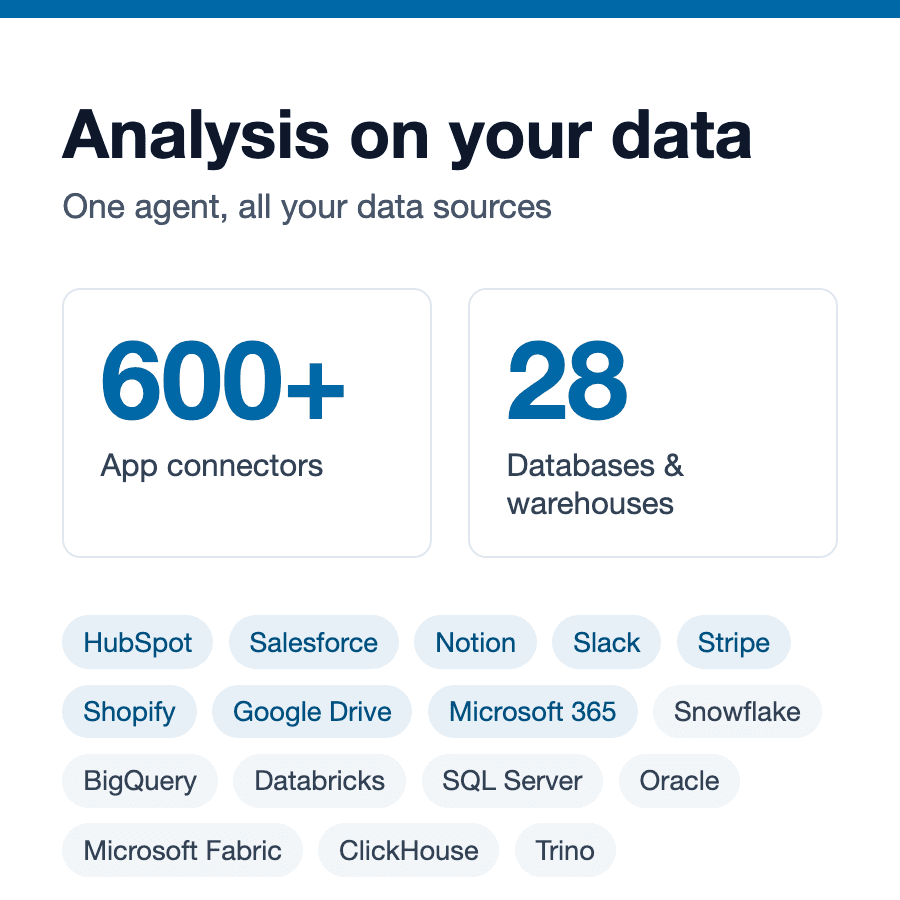
So we keep extending how explai connects to company data. The explai analyst agent now works with more than 600 business applications and 28 databases and data warehouses.
Query data where it lives
Alongside Snowflake, BigQuery, Databricks, Redshift, PostgreSQL, MySQL and MongoDB, explai now also supports SQL Server, Oracle, Microsoft Fabric, Azure Synapse, ClickHouse, Trino, Amazon Athena, MotherDuck and more. 19 of these engines are new and available in beta.
The principle stays the same:
- In each engine's own SQL dialect. The agent writes queries in the language of the engine it is talking to.
- Read-only. Every query passes through a guard that allows read access only.
- No copies. Your data stays in your system. Profiling, data knowledge and cross-source joins work directly on these tables.
Context from the tools you already use
Numbers alone rarely explain what happened. That is why more than 600 app connectors let you bring in HubSpot, Salesforce, Notion, Slack, Stripe, Shopify, Google Drive, Microsoft 365, Atlassian, Asana and hundreds more. Together they give the agent more than 12,900 tools across 16 categories, from productivity to sales and marketing to financial services.
This lets the agent connect your numbers with the context behind them: the deal notes, the open tickets, the campaign data.
Databases and tools are configured at project level. A team working in a project collaborates on exactly the data that is relevant to the task and approved for it. Each connection uses an account of your company, and the agent sees only what that account is allowed to see.
Tools can be provided centrally for the whole organization or set up by teams in their own projects. Each company chooses its own balance between autonomy and central control.
The split is clear: databases are for analysis, meaning tables, profiling and joins. Connectors provide context and enable actions, such as CRM records, tickets, documents or ad data.
Interactive views from individual tools, such as diagrams or document viewers, appear directly in the chat.
One question across all sources
For example: "Which enterprise customers with open support tickets are using our product less this quarter?"
explai pulls the usage data from your warehouse and the tickets from your helpdesk, joins the two, and answers with a chart and the reasoning behind it. The more closely the analysis is tied to your data, the better founded the answer.
Getting started
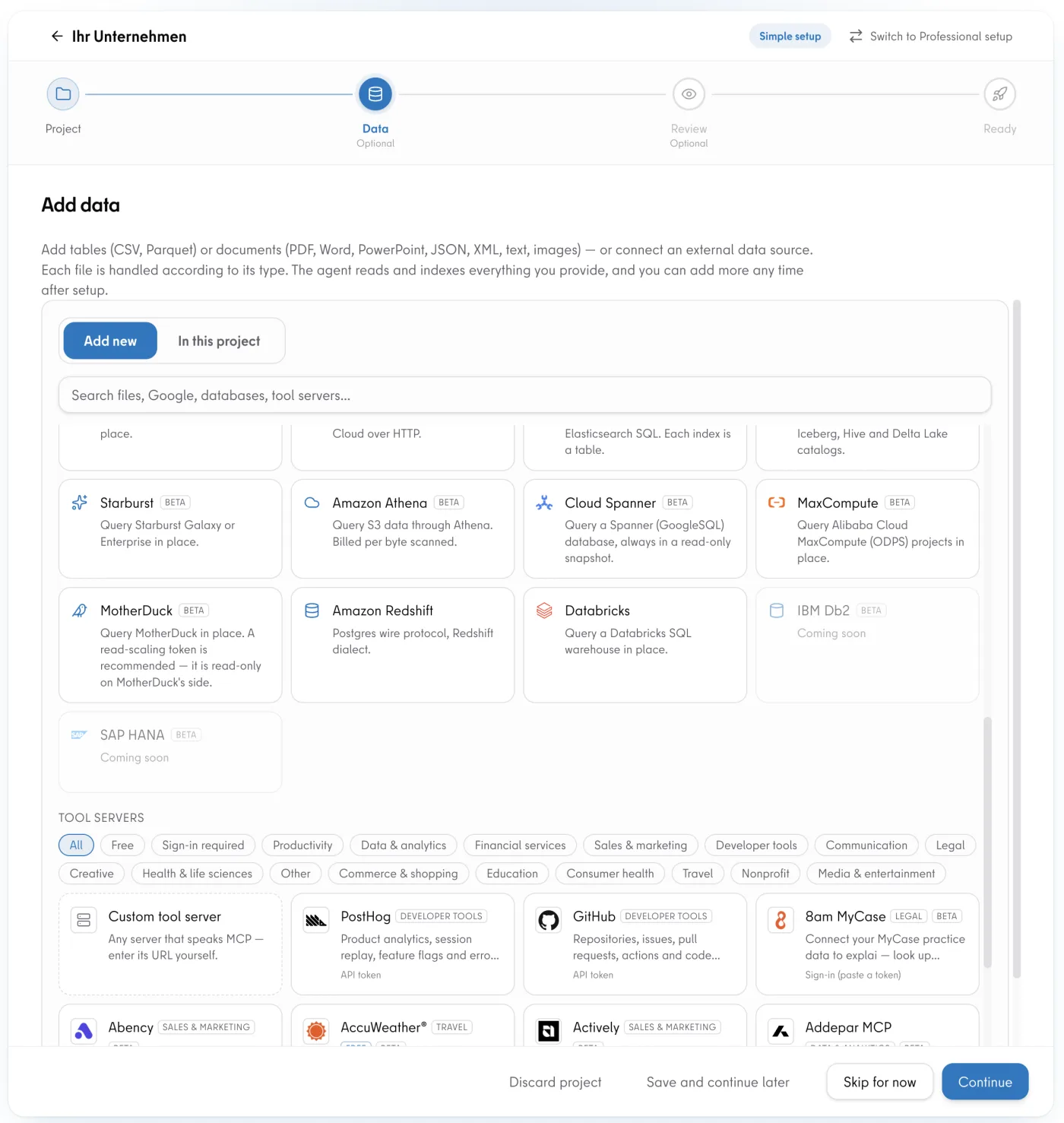
You connect databases and tool servers when setting up a project, in the Add data step, alongside files such as CSV, Parquet or PDF. You can add more sources at any time.