
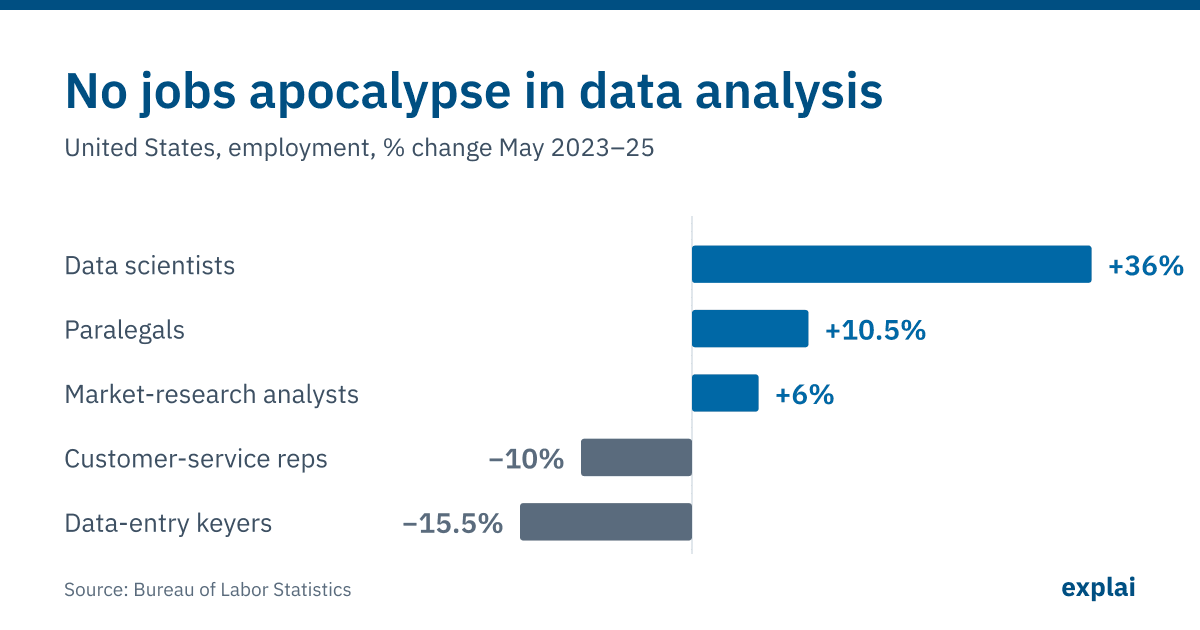
According to the TU Darmstadt KI-Monitor 2026, 43 percent of respondents who rate their AI knowledge as very good expect AI to take over their work before long. The worry clusters where the output is digital: legal documents, code, analyses.
United States
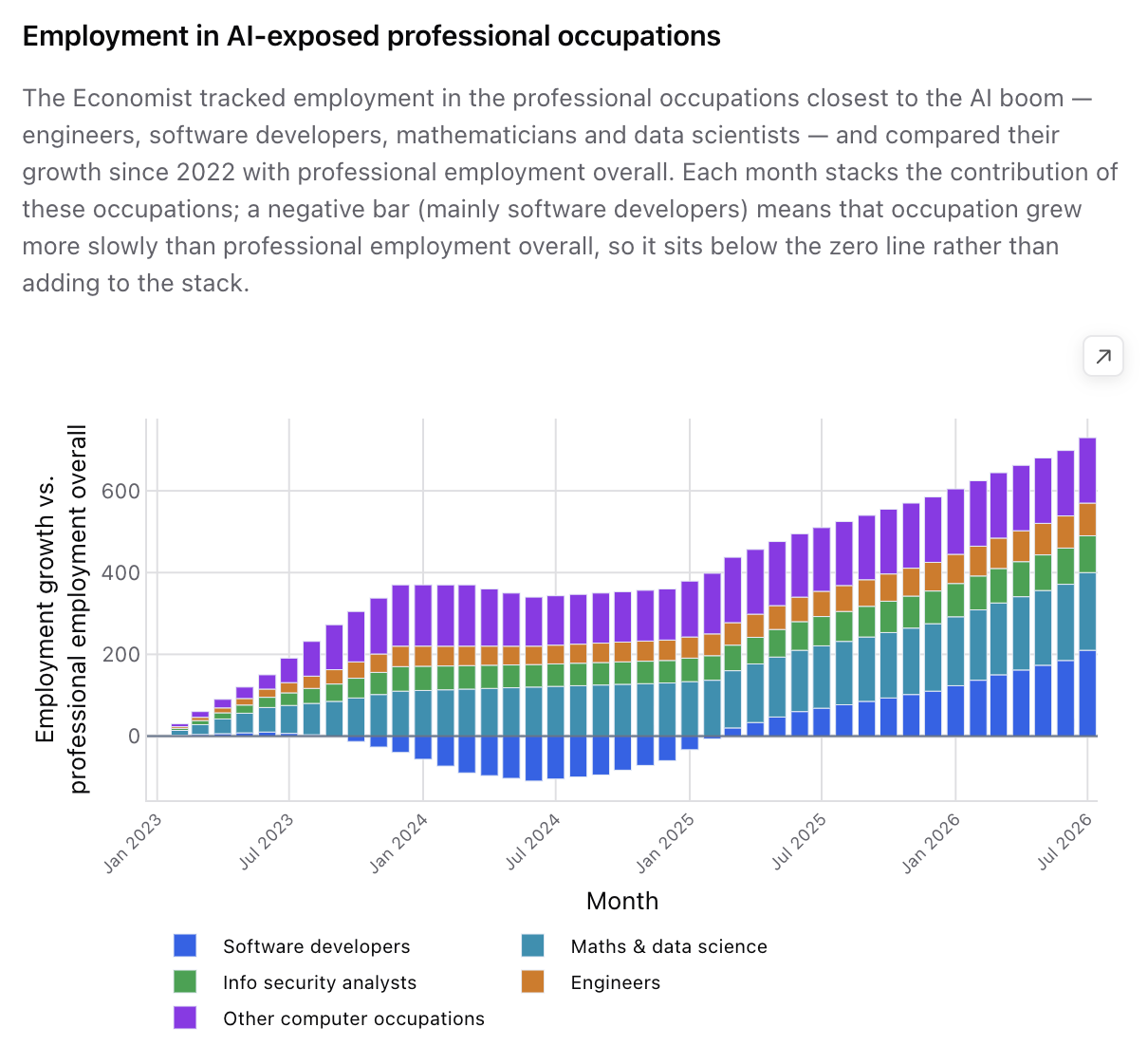
American labour-market data points the other way. In its 4 September 2026 analysis, "The jobs apocalypse is postponed. An AI jobs boom is here", The Economist puts the number of AI-created jobs at around one million — against some 200,000 lay-offs attributed to AI. We rebuilt that analysis from US Bureau of Labor Statistics figures in our explai Sandbox. Employment in AI-exposed occupations has grown markedly faster than professional employment overall:
Data science grows fastest of all — an occupation whose productivity AI tools like explai raise directly:
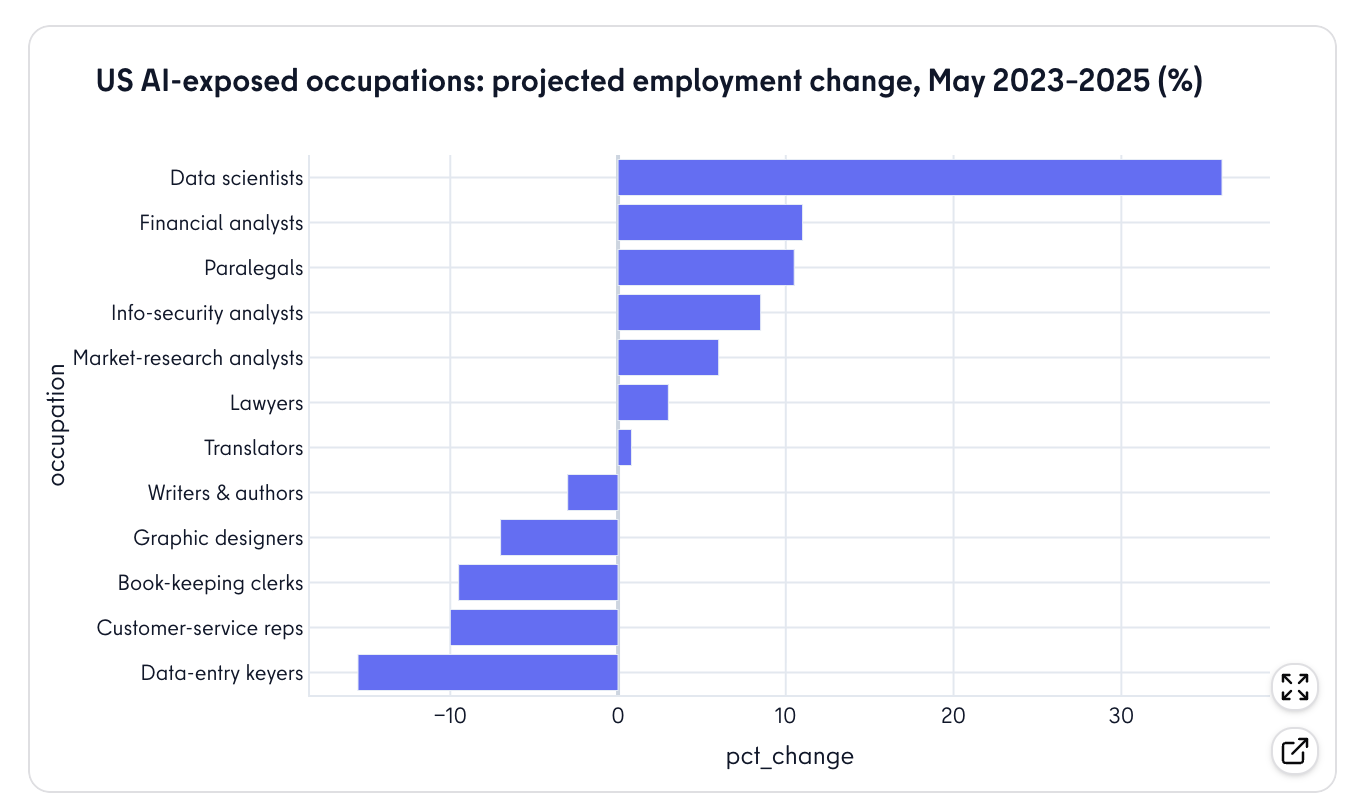
That is surprising only at first glance:
- Quality assurance. Using AI for analysis in any dependable way takes people who can check what it produces. At explai we consider this decisive enough to have built a product for it, the Workbench.
- The Jevons paradox. When analysis gets cheaper, demand for analysis rises. Efficiency gains create additional work here rather than removing it. That matches our own experience from years of running data teams: the backlog of worthwhile analyses is vast even in large data teams — and large data teams are rare.
Europe
In Europe, only the United Kingdom records its labour-market statistics in sufficient detail: SOC 2020 carries "3544 Data analysts" as an occupation in its own right. Eurostat and the German Bundesagentur für Arbeit work with older classifications and fold data analysis into broader categories such as expert-level IT generalists.
The British figures show no boom on the American scale, but they do show steady demand for analysts.
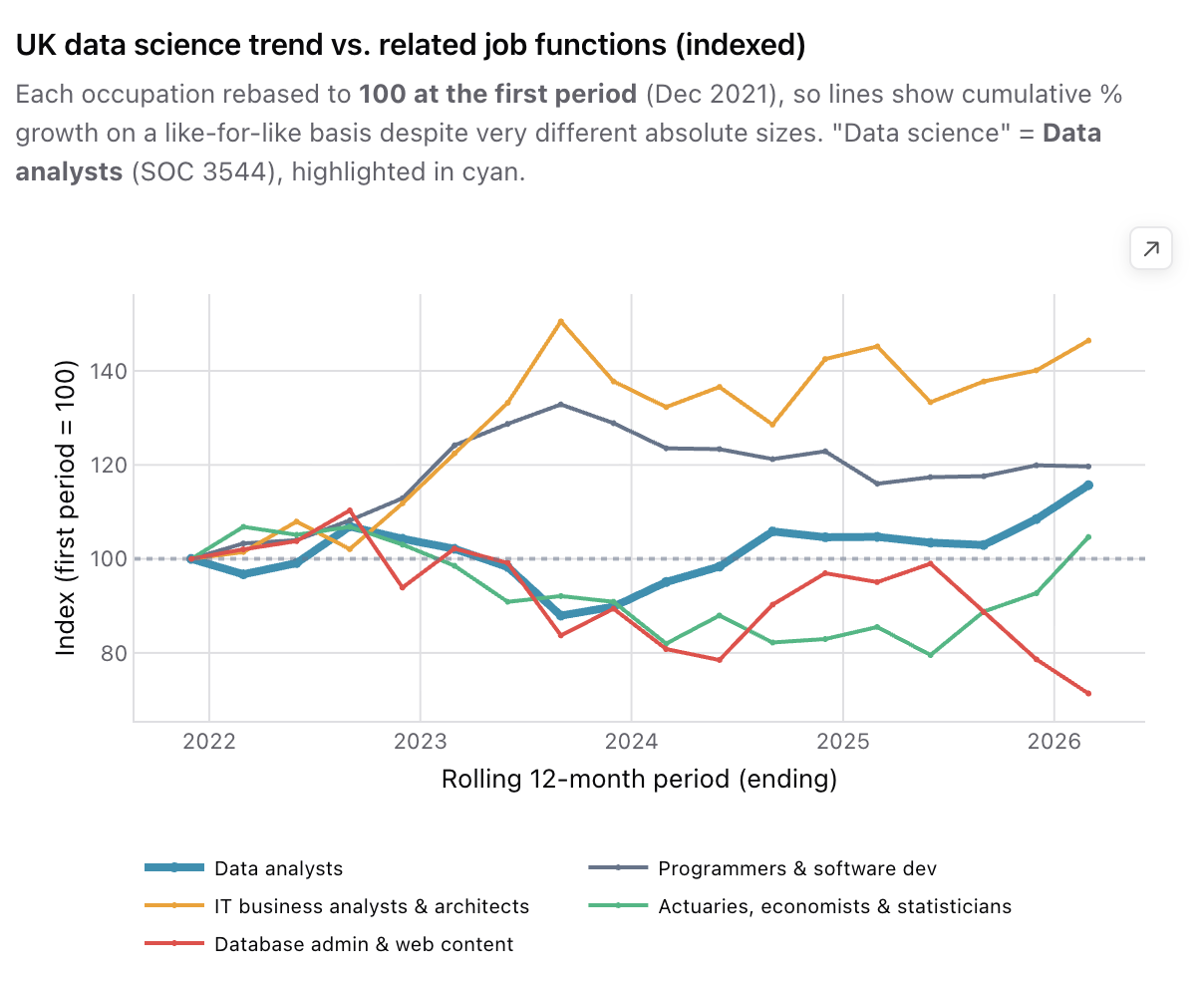
On neither side of the Atlantic, then, is there evidence of an AI-driven collapse in data work. What shows instead is a European investment gap: the role that guides the AI transition is not being built up here at the same pace. That can become a strength. European tools like explai raise the productivity of analysts by letting them configure and supervise analysis agents for their internal customers rather than producing one analysis at a time. A data-science boom can emerge that way even in a less flexible labour market.
Every dataset and analysis used in this article can be explored live in our explai Sandbox. Signing up is free; just copy the “Job Trends” project. We welcome feedback — through our contact form or on LinkedIn.